
Cloud sovereignty means maintaining full control over data, infrastructure, and cloud services in order to be able to act technologically, legally, and operationally independent of third countries or proprietary providers.
It is crucial for data protection (GDPR), compliance, risk mitigation, and strategic independence in digital transformation.

Cloud sovereignty means maintaining full control over data, infrastructure, and cloud services in order to be able to act technologically, legally, and operationally independent of third countries or proprietary providers.
It describes the ability of companies and organizations to manage their digital infrastructure autonomously while reliably meeting data protection, compliance, and security requirements.
Ensuring GDPR compliance and regulatory requirements.
Reducing dependencies on individual cloud providers.
More control over critical business processes and digital infrastructure.
Foundation for the sovereign use of data and AI.
A sovereign, GDPR-compliant cloud is critical for European companies because it ensures control over data, legal jurisdiction, and operational dependencies. These factors are increasingly under pressure, for example, due to geopolitical conflicts and the market power of a few global cloud corporations.

The current geopolitical situation (from trade conflicts and sanctions to the technological dominance of individual states) has turned the topic of cloud from an IT decision into a strategic risk and sovereignty issue.
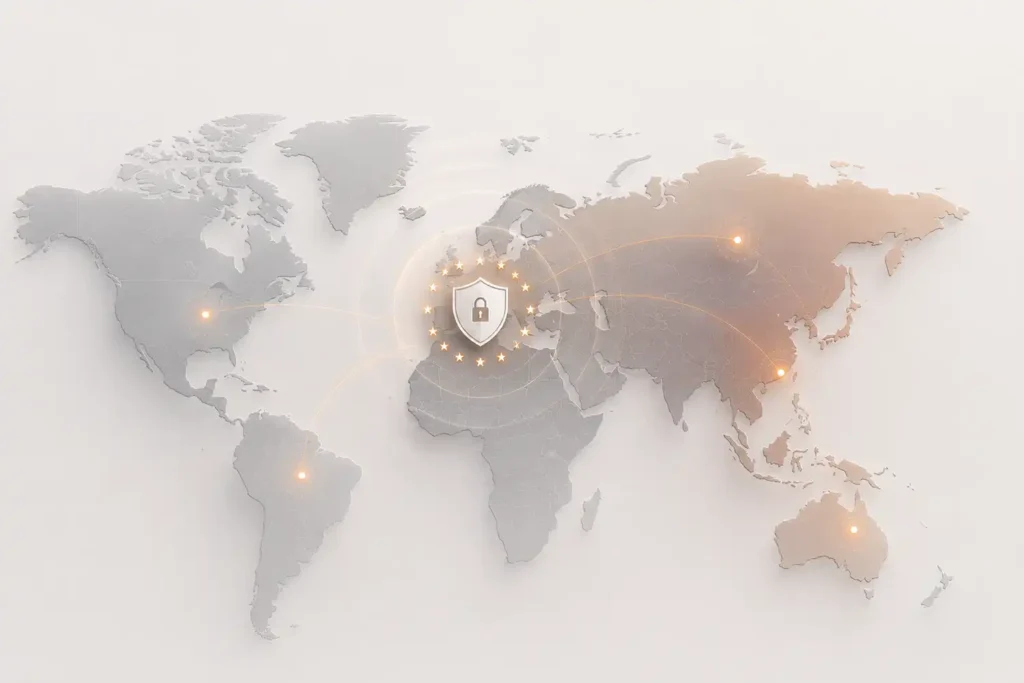
States and economic areas like the EU are beginning to understand digital infrastructures as critical resources. Whoever controls cloud infrastructure influences data flows, innovation capacity, and economic stability.

Find out when a cloud provider switch makes sense, how to evaluate costs, complexity, and dependencies, and how to future-proof your cloud architecture with the right strategy.
A central problem lies in the collision of European data protection law with extraterritorial laws of other states, such as the US CLOUD Act.
Even if data is physically stored in a data center in the EU, it can still be requested or made accessible by foreign authorities under certain circumstances if the cloud provider is subject to corresponding third-country law.
This leads to several risks:
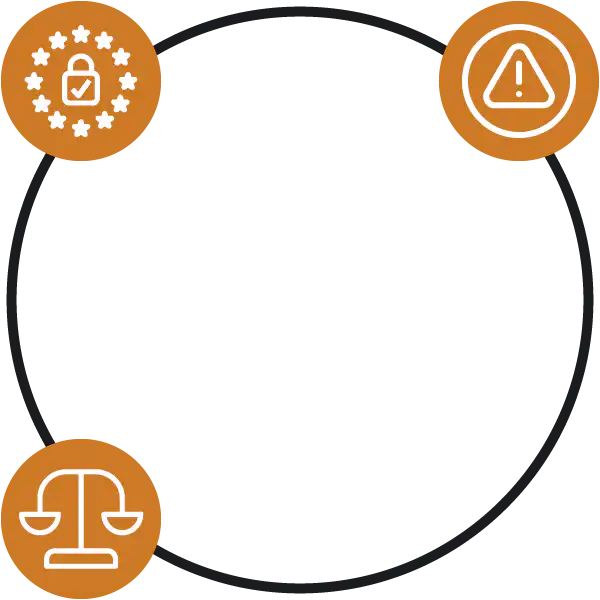
This problem is seen today as the main driver for cloud sovereignty: companies are looking for solutions where technical, organizational, and legal control fit together.
The European cloud market is heavily dominated by a few US hyperscalers: as of 2025, the corresponding market shares were around 70–80 percent, with a trend that has been rising for years. For companies, entering the cloud with a hyperscaler is convenient at first, but leads to structural dependencies in the medium to long term.
The European cloud market is heavily dominated by a few US hyperscalers: as of 2025, the corresponding market shares were around 70–80 percent, with a trend that has been rising for years. For companies, entering the cloud with a hyperscaler is convenient at first, but leads to structural dependencies in the medium to long term.
Europe therefore faces the challenge of utilizing the innovation opportunities of the cloud without losing control over critical infrastructures.
The EU has taken up the topic of cloud sovereignty and anchored it in a framework. This is intended to define clear requirements for cloud services used in the public sector and in security-critical areas.
| • Strategic | sovereignty |
| • Legal | |
| • Data and AI related | |
| • Operational | |
| • Supply chain relevant | |
| • Technological | |
| • Security & compliance related | |
| • Ecological/sustainable |
This shows that cloud sovereignty has developed into a measurable procurement and architecture criterion.
For European companies, this specifically means:
In short: The cloud is now part of the geopolitical reality of companies. This makes cloud sovereignty a core component of corporate strategy, as it no longer only affects IT architecture.
A sovereign, GDPR-compliant cloud is therefore the foundation for digital agency in Europe.
Loss of control over
A cloud where companies can ensure:
| Criterion | Standard Cloud (US) Hyperscaler | Sovereign (EU) Cloud |
|---|---|---|
| Data control | limited | high |
| Jurisdiction | potential third-country access (CLOUD Act) | EU law |
| GDPR risk | increased (conflicts possible) | reduced |
| Access by authorities | potentially extraterritorial | clearly limited |
| Vendor lock-in | usually high | reduced |
| Geopolitical resilience | low | high |
| Strategic control | limited | given |
Table: Comparison of Standard Cloud (US Hyperscaler) vs. Sovereign (EU Cloud) – Overview of criteria for data control, GDPR compliance, jurisdiction, and strategic resilience.