Germany's digital future is stalling: Energy bottlenecks and bureaucracy are slowing down data center expansion
Data centers have long since ceased to be mere technical storage rooms for data; they are part of the backbone of our modern economy. Without this physical foundation, neither Industry 4.0, digital transformation, nor Artificial Intelligence applications are feasible. The demand for computing power is literally exploding: over the last ten years, the industry has seen an increase in IT connected load of over seventy percent. However, while there is much theoretical talk about digital sovereignty, Germany is at risk of being left behind in practical implementation. Despite available capital and high demand, the location faces massive structural challenges.
Power supply as a bottleneck
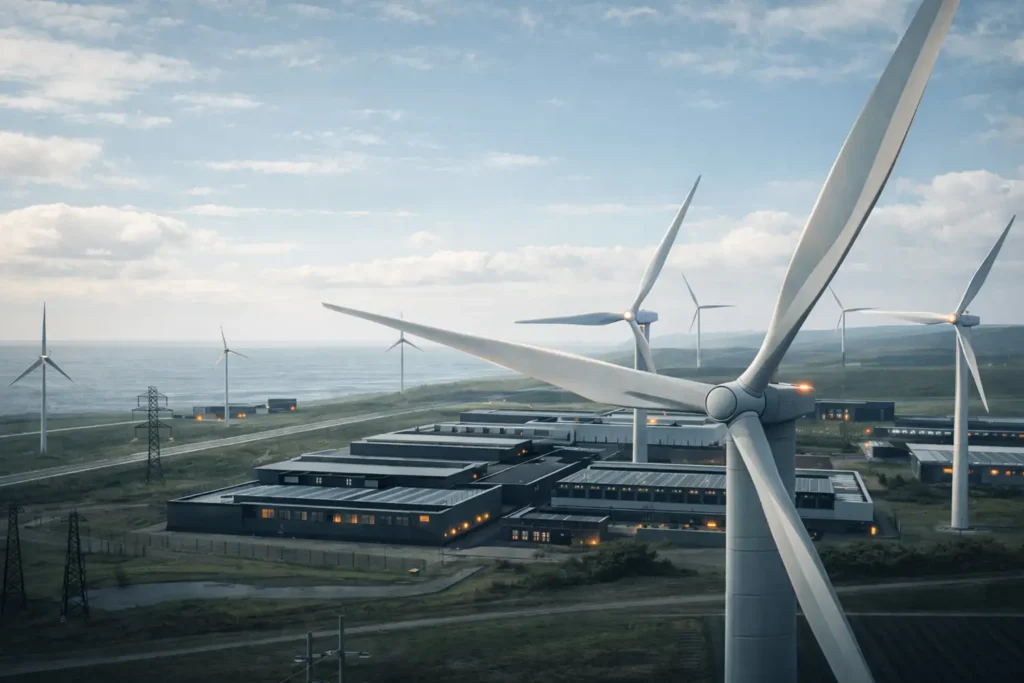
Probably the most acute problem in expanding digital infrastructure is not a lack of willingness to invest: it is the availability of energy. Power is the new limiting factor. In many places, German grids are operating at their limits, and grid expansion is lagging seriously behind actual demand. Delivery times for essential hardware components are particularly critical: operators now have to wait up to four years for central components such as transformers.
These delays have far-reaching consequences. Forecasts indicate that Germany faces a capacity gap of at least one gigawatt of IT power starting in 2028. In the Rhine-Main region, one of the world’s most important data hubs, the “power bottleneck” could drag on into the late 2030s. Without guaranteed connected load and competitive electricity prices, investments are becoming increasingly unattractive, and energy-intensive projects are migrating to neighboring countries.
Paul Ronzheimer in conversation with Jerome Evans, founder and CEO of firstcolo, about an alarming bottleneck: a lack of energy for the digital future.
Bureaucracy slows down the pace of innovation
In addition to the physical infrastructure, bureaucratic sluggishness is a decisive competitive disadvantage. While a data center in the USA is often realized within one to two years, comparable projects in Germany currently require three to four years. Approval processes are too complex and lengthy to keep pace with the rapid rate of innovation in the tech industry. While Germany once stood for technological innovation, in the third consecutive year of economic weakness, it is primarily insolvencies and the migration of industry that are progressing. In this country, progress is merely being managed—and poorly at that—instead of being actively shaped.
Additional regulatory hurdles, such as the discussions surrounding the “AI Act“, create planning uncertainty even before technologies are market-ready. This structural inertia means that Germany is losing not only time but also value creation and jobs. To remain internationally competitive, the industry urgently needs debureaucratization and “fast lanes” to accelerate critical infrastructure projects.
The dilemma of waste heat utilization and land scarcity
Sustainability has long since become a requirement for modern data center operators. For example, the new Energy Efficiency Act requires that the resulting waste heat be made available for use. This is a sensible measure through which municipal facilities such as swimming pools or private households can be supplied. However, municipalities often still lack the necessary infrastructure—namely district heating networks—to even receive the energy provided. The planning of such heating networks is progressing more slowly than the expansion of data centers.
Conclusion: Politicians must deliver now
The diagnosis is clear: Germany is heading toward a massive gap in infrastructure capacity unless bureaucratic hurdles and bottlenecks in the energy supply are radically reduced. To enable the economy and operators to act, politicians must now create the necessary conditions. This requires a closing of ranks—not just between politics and business. The burden of proof lies with politicians, who must agree on a long-term common strategy, transcending party-political conflicts of interest, to strengthen the business location.
Time is of the essence: Germany now needs a prioritization of grid expansion, pragmatic approval procedures, and an understanding of data as a valuable industrial product. Only if the course is set now and domestic capacities “Made in Germany” are built up can digital sovereignty be secured in the long term, dependence on critical digital infrastructure be reduced, and the decline of entire sectors of the economy perhaps still be halted.
Choose sustainable colocation that saves you money!
Do you want to reduce IT costs and increase your company’s economic efficiency?
We would be happy to advise you.