From Energy Consumer to Energy Partner: Data Centers Rethought

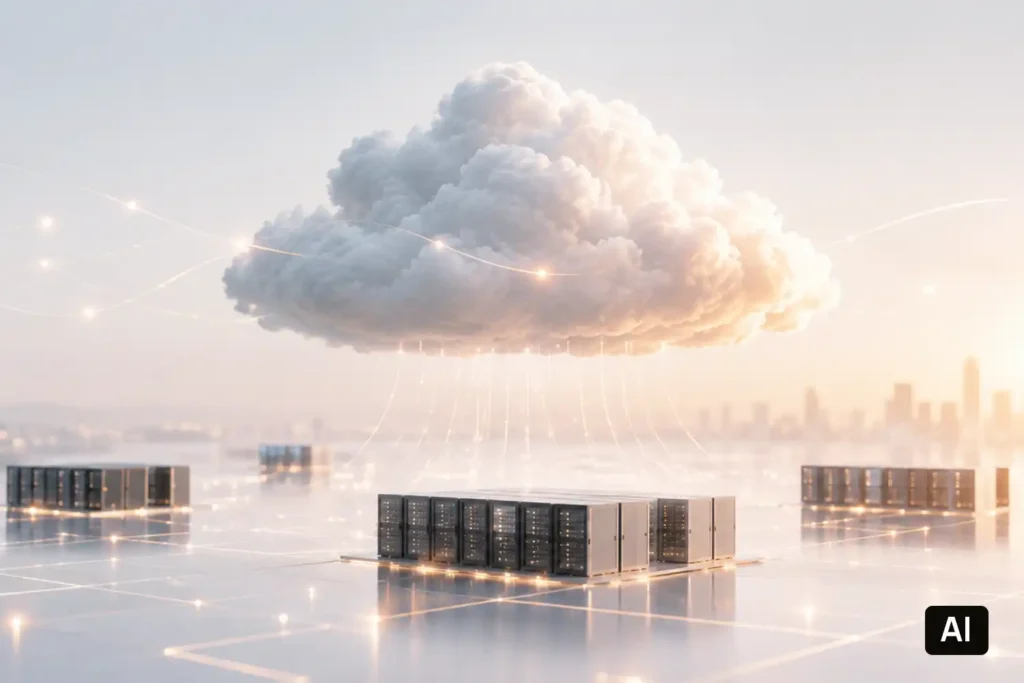
Today, data centers are far more than mere data processors – they act as central partners in the energy transition. How digital infrastructure actively shapes and stabilizes the energy grid of the future.

Energy Partner

Introduction

The demand for data center services is growing massively – in the German colocation market alone, a doubling of installed IT capacity to approximately 3.3 gigawatts (GW) is predicted by the end of 2029. As grid bottlenecks and long lead times hinder expansion, data centers are transforming from mere consumers into active energy partners through waste heat utilization and flexible load management. This systemic approach is essential to secure Europe’s digital sovereignty despite strained energy markets.

A Turning Point: AI and the Energy Hunger of Infrastructure

The digital transformation of the global economy is progressing at an unprecedented pace. At its core is Artificial Intelligence, whose proliferation is significantly increasing energy demand. In Europe alone, an additional demand of over 1 GW per year is projected in the coming years to boost the digital economy.
However, this boom is encountering physical limits: In core markets like Frankfurt am Main, which already has an IT load of 1,020 megawatts (MW), vacancy rates are drastically decreasing. Currently, it stands at just 4.8 percent and could fall to a record low of 3.4 percent by the end of the year. Therefore, growth driven by more complex models can no longer be offset solely by internal efficiency gains, especially since global power supply bottlenecks are extending new construction timelines, in some cases, until 2027 and beyond.

From Silo Thinking to Systemic Integration

A radical rethinking is necessary: away from the isolated consumer, towards the systemic actor. The challenge is immense, as grid connection requests can, according to a study by the International Energy Agency (IEA), currently entail waiting times of up to seven years. The solution lies in the role of the data center as an “energy orchestrator”.
Data centers must make their waste heat usable as a valuable resource for urban heat supply and synchronize load peaks with the availability of renewable energies. Technologies for island operation or the use of local power generation are gaining importance to reduce dependence on overloaded public grids while acting as a stabilizing factor in the energy system.

Societal Added Value and Location Factors

Growth and sustainability must not be contradictory. Although energy consumption per calculation at the chip level has been reduced by approximately 23 percent annually since 2013, the absolute energy hunger continues to grow. For a holistic view, this consumption must be seen in relation to the enormous savings potential offered by AI in other sectors.
At the same time, site selection becomes strategically crucial. While markets like Frankfurt are growing, locations like Berlin are also gaining importance, currently boasting an IT load of 152 MW and a projected growth rate of over 25 percent. Transparency towards the public, for example, through the visible feeding of heat into district heating networks, is essential to build acceptance.

Technology in Practice: Design for the Future

Future-proof data centers consistently rely on energy-efficient design and AI-optimized cooling. This is urgently needed, as the industry’s average PUE (Power Usage Effectiveness) value has stagnated at around 1.58 since 2020.
To break through this efficiency limit, new technologies such as liquid cooling are almost unavoidable – especially since AI racks can soon reach power densities of over 150 kW. An example of this new generation are concepts that combine high-density racks with powerful liquid cooling and aim for PUE values significantly below the industry average. Supplemented by 100 percent renewable energies and openness to H₂ fuel cells, this infrastructure combines digitalization and climate protection at a technical level.

Conclusion: Shaping Tomorrow's Energy Landscape

The industry stands at a crossroads. Data centers are now far more than mere data processors – they act as central partners in the energy transition. Given globally declining vacancy rates averaging 6.6 percent, the pressure to act is high. Those who think systemically now and invest in efficient, grid-serving infrastructure not only secure the basis for future digital innovations but also actively shape tomorrow’s energy landscape.


Newsletter

Latest Posts

LinkedIn

Opt for sustainable colocation that saves!

Do you want to reduce IT costs and increase your company’s economic efficiency?

We would be happy to advise you.

WordPress Cookie Notice by Real Cookie Banner