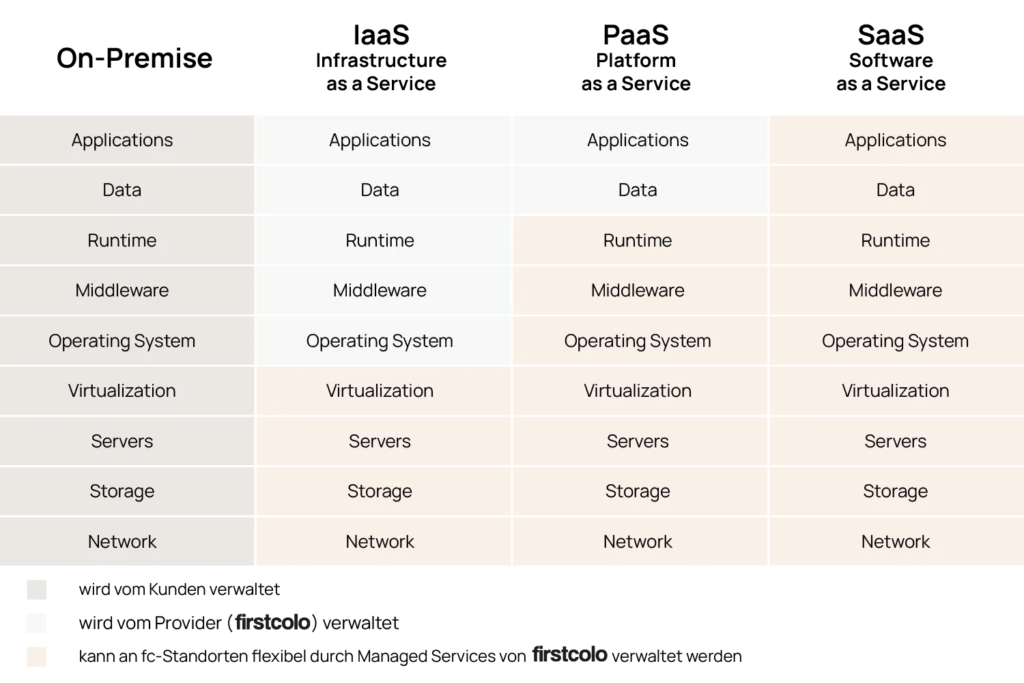
PaaS stands for “Platform as a Service” and is a cloud computing service. A provider delivers a virtualized IT infrastructure, including an application and/or development platform, over the internet.
PaaS provides companies with a comprehensive environment for developing, testing, and deploying applications. Unlike traditional IT infrastructures, where you must manage servers, networks, and storage yourself, PaaS provides a ready-to-use platform. This platform includes all necessary components so developers can focus entirely on building software without having to worry about the underlying hardware.
PaaS offers significant benefits for companies looking to accelerate application development. For example, scalability is a major advantage: applications can be easily scaled up or down depending on the company’s needs. You only pay for the resources you actually use.
Another advantage is time savings. Developers do not need to set up or configure infrastructure. PaaS services already provide preconfigured development environments, which speeds up the development process and reduces time to market.
Security updates, patches, and maintenance are also among the benefits. The PaaS provider handles the administration and maintenance of the platform, allowing you to focus fully on your core tasks.
PaaS is ideal for developing and deploying cloud-based applications. Developers use the platform to efficiently build mobile apps, web applications, or APIs. They have access to a wide range of tools and services optimized for these tasks.
Another use case is workflow automation. Developers can set up automated testing and deployment processes to bring their applications into production faster and more efficiently.
PaaS in a data center offers additional benefits such as maximum security and availability. By using a professional data center, you benefit from redundant power supply, cooling, and monitoring. Your applications run in a highly secure environment and are protected against outages.
In addition, hybrid cloud models are easier to implement when PaaS is combined with on-premises infrastructure. This allows companies to retain full control over their data while still benefiting from the advantages of the cloud.