What Is Chia Farming?
Frankfurt, May 10, 2023 – What if there were resource-efficient alternatives to the currently popular IT solutions? This would open doors to more sustainable operations. Among the technologies currently on everyone’s lips is undoubtedly blockchain. It is often based on so-called mining, which is very computationally intensive and relies on specialized and expensive hardware components with high energy consumption.
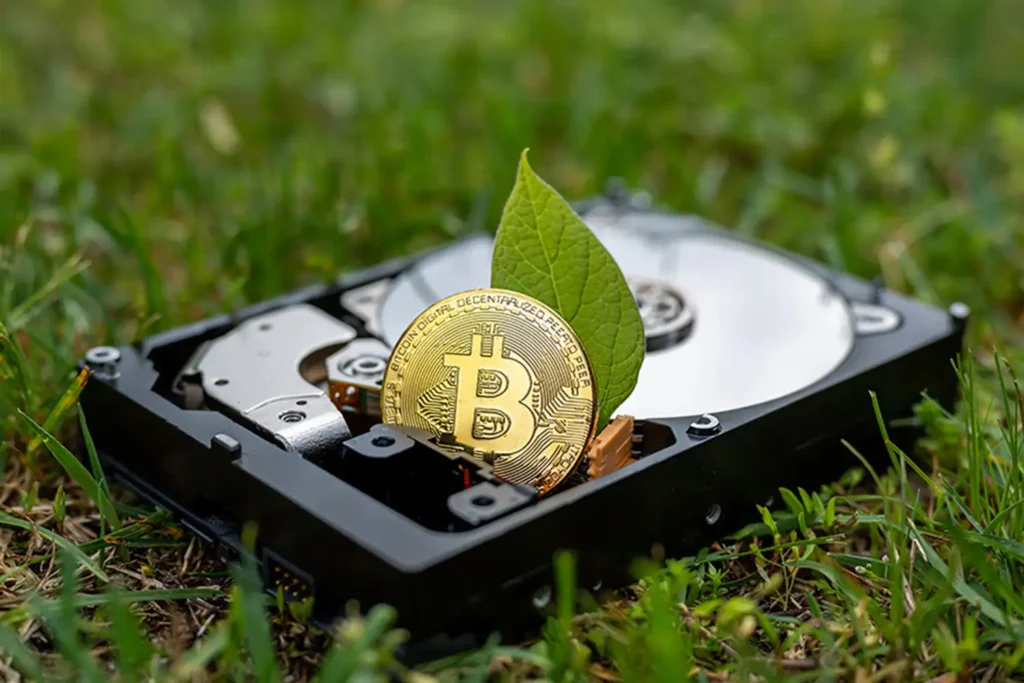
“In contrast, Chia farming presents itself as a more ecological new blockchain technology. Instead of performance-intensive CPU or GPU calculations, it primarily uses hard disk storage as a validation mechanism for blockchain transactions,” says Jerome Evans, founder and managing director of firstcolo GmbH, about the green alternative. “Furthermore, Chia farming stands out because any free hard disk storage can become a node in the network—which in turn leads to significantly stronger decentralization. Chia is the most prominent new cryptocurrency that leverages the advantages of farming.”
Blockchain Technology Consumes Large Amounts of Energy
As probably the best-known cryptocurrency, Bitcoin has now become established. In the context of mining, new blocks and transactions are generated and validated using the proof-of-work mechanism. Miners solve increasingly complex computational tasks, so-called block challenges, using computing power. “The result: with each Bitcoin mined, the energy demand increases. Combined with the effort required for the multitude of transactions, energy costs reach unprecedented levels,” outlines blockchain expert Evans. The consumption of Bitcoin miners exceeds 100 terawatt-hours annually. This consumption is more than a hundred times higher than that of Chia.
The new cryptocurrency works differently than Bitcoin. It relies on the previously described storage space instead of computing power—the concept is called Proof of Space. “This gives everyone the opportunity to obtain digital coins by expanding Chia’s storage network with free capacity. This is then used to create new storage plots. In plain terms, this means that everyone who provides storage participates in Chia’s success,” adds the firstcolo managing director. Due to this characteristic, Chia is often referred to as a democratic alternative to Bitcoin. But what does reality look like?
Chia Farming Requires Large Amounts of Storage—or Patience
In fact, providing storage space enables anyone to receive Chia in return. However, the rule is: the fewer terabytes interested parties can contribute, the longer they must wait on average for their return. With only one terabyte of storage space, the average waiting time quickly reaches double-digit years. “Therefore, the term ‘democratic’ is somewhat misleading, because not everyone has the same opportunities. Large crypto farms provide gigantic amounts of storage space and thus obtain the cryptocurrency. This extends the average waiting period for other interested parties,” explains Evans.
“However, even without high investment, smaller farmers can join a so-called pool. Here, each member receives a secure payout based on the size of the storage space provided. Due to the necessary storage as a countervalue, hard drives play a major role. These are significantly cheaper than high-performance processors and thus more attractive to more end users. In the future, Chia will therefore gain relevance,” Evans continues. Since the systems used also require far less power than those for mining conventional cryptocurrencies, they generate lower overall costs. Thus, they can be described as more ecological in a certain sense.