In many cloud projects, the compliance department raises concerns sooner or later. The task is clear: minimize risks and comply with regulatory requirements. Especially with international corporations and US hyperscalers, there is justified uncertainty—for example when it comes to handling sensitive data or trade secrets.
This raises the question: Under what conditions can the cloud be designed so that compliance is on board from the outset?
Episode 4: "Our compliance department is very critical of the cloud."
Compliance concerns are not a side issue in cloud projects. They affect key questions around data processing, legal frameworks, and risk assessment. Especially when sensitive data is processed or industry-specific requirements apply, it is understandable that compliance departments take a close look.
The key question, therefore, is not whether cloud and compliance are fundamentally compatible—but under what conditions a cloud solution can be set up so that it meets regulatory requirements and can be robustly assessed internally.
Location and legal framework: A clear basis for assessments
An important point of reference for compliance in terms of sovereignty is the location of the data and its processing, and the applicable legal framework associated with it. If data is processed and stored in data centers in Germany, European and national requirements apply—ones that compliance departments are familiar with from other projects—for example:
- GDPR,
- industry-specific requirements (e.g., KRITIS, NIS2, GCP).
A cloud provider with data centers in Germany and non-proprietary software solutions creates a reliable basis. Data processing takes place in a legal environment that can already be assessed and classified internally.
Certifications: Shared references for security and quality
In addition to location, certifications play a central role. They provide verifiable evidence of established processes and security standards:
- ISO 27001: structured information security management with documented measures,
- ISO 9001: quality management with clear processes and continuous improvement,
- TÜV-certified data center level 3: high requirements for availability and technical infrastructure.
For compliance departments, these certificates provide concrete reference points: risk analyses, audit preparation, and queries from regulators, customers, or internal audit can be addressed using recognized standards.
No US parent company: Clarity on the CLOUD Act
Another point is the US CLOUD Act. Under certain conditions, US authorities can access data processed by US companies—even if the data or data processing locations are outside the US.
For compliance, this can be critical especially in the following areas:
- processing of personal data,
- regulated industries with strict requirements,
- trade secrets.
A cloud provider that is legally anchored in the EU and has no US parent company significantly reduces this specific risk. Potential access under US law is irrelevant in this scenario. This makes internal assessments and discussions with data protection officers or legal departments easier.
Take the test: Is a switch worthwhile for your company?
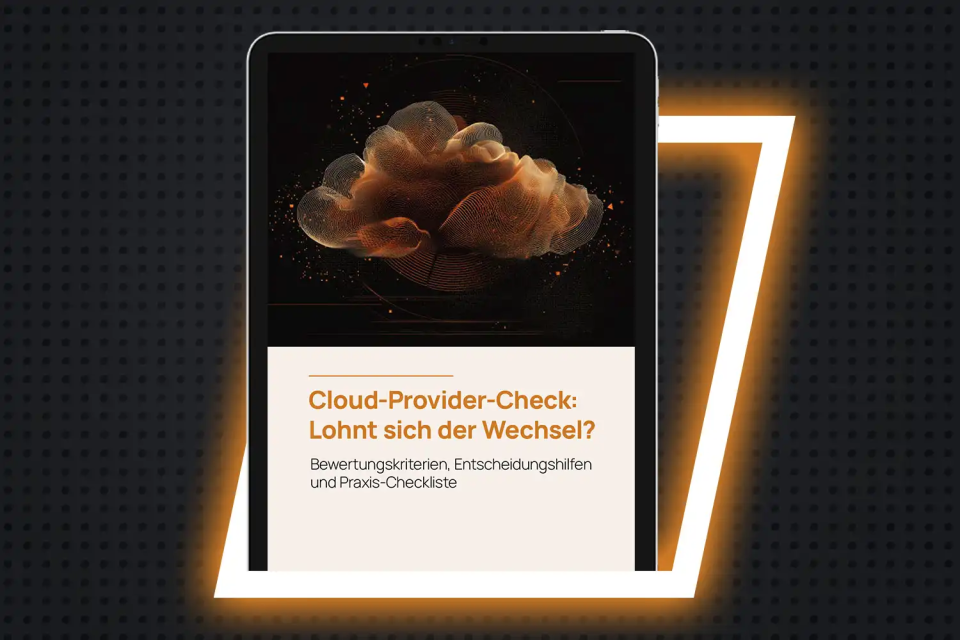
In our whitepaper “Cloud Provider Check: Is it worth switching?” you will find practical checklists for everything you need to consider—as a concrete basis for decision-making for your cloud project.
You can look forward to the following content:
- Which cloud deployment model suits us?
- Migration strategies for switching cloud providers
- Provider switch checklist
- Cloud deployment model checklist
- Migration strategy checklist
Documentation and audits: Cloud providers as compliance partners
Compliance does not only assess technical measures, but also the documentation behind them: contracts, technical and organizational measures (TOMs), risk assessments, data processing agreements, reports from audits or penetration tests.
A cloud provider is helpful if it:
- provides structured documentation (e.g., security concepts, certificate evidence, descriptions of data flows),
- supports compliance or data protection departments with specific information when questions arise,
- quickly provides meaningful documents and contacts in the event of an audit.
This creates clear, traceable bases for decisions. Stakeholders on the customer side need to spend less time laboriously gathering information and can focus on assessment and approval.
Conclusion: Convince with solid, early involvement
The objection “Our compliance department is very critical of the cloud” points to key requirements that should be taken into account in any case. A sovereign cloud from Germany offers good starting points here:
- data centers within the EU legal area,
- established security and quality certifications,
- no US parent company and therefore no CLOUD Act risk,
- as well as concrete support with documentation and audits.
If these aspects are incorporated early into provider selection, contract design, and architecture—and compliance is involved from the beginning—robust operating models emerge: cloud solutions that meet functional requirements while respecting regulatory boundaries.