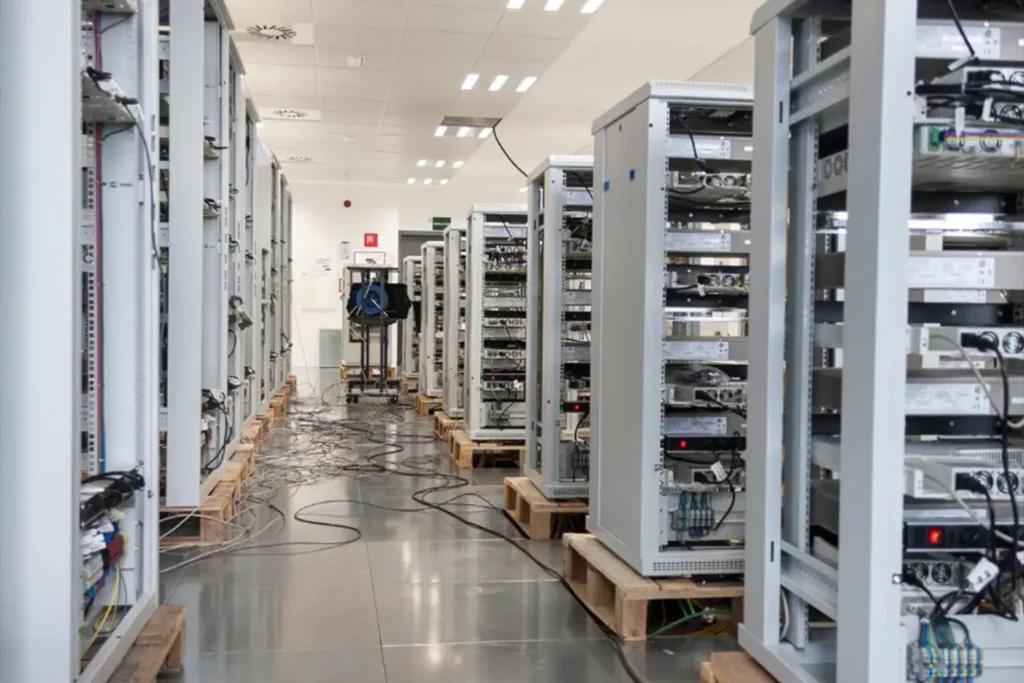
Frankfurt, January 22, 2025. Around the turn of the millennium, a real construction boom for data centers and colocation space began in Germany. Many of these facilities are still in operation today. However, the rapid development of information technology means that data centers must be modernized or replaced at increasingly shorter intervals. Whenever an operator celebrates the groundbreaking of a new data center, the terms “sustainability” and “environmental protection” must not be missing. Reducing the CO2 footprint is therefore one of the most important goals when planning new facilities today. Decommissioned data centers in particular represent a challenge, as they often contain large amounts of hardware, infrastructure, and resources that cannot simply be disposed of. “The responsibility for sustainable disposal and reuse of components is therefore growing in both economic and ecological terms,” says Jerome Evans, founder and CEO of firstcolo GmbH.
Focusing on recycling
The first step is to analyze a data center’s hardware. Many components, such as servers, storage devices, and networking equipment, may still have a significant lifespan. “One option is to ‘refurbish’ these devices—meaning to recondition them and return them to the market. Companies that need to rely on cost-effective solutions benefit from used but technically flawless equipment,” Evans explains. In this process, quality assurance and hardware certification are of central importance to ensure that the reused devices meet the required performance standards.
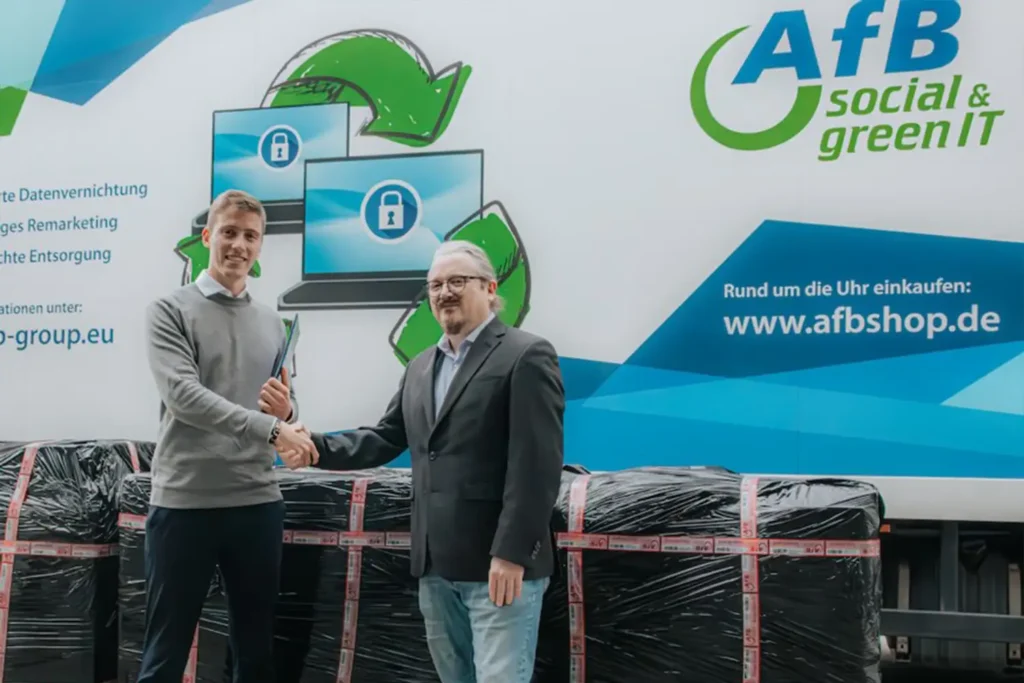
Another crucial aspect is recycling: electronic waste in particular poses a significant environmental hazard, as many components contain toxic substances. Therefore, it remains essential for data centers to work with certified disposal companies that have the necessary expertise to safely separate and recycle the various materials. Metals such as copper, aluminum, and gold can be recovered from old equipment and reused. Other materials, such as plastics and glass, are also fed into environmentally friendly recycling. This not only minimizes waste but also reduces resource consumption. “In addition to the hardware, there is also the possibility of repurposing a data center’s infrastructure. For example, the physical premises can be redesigned for other purposes, such as co-working spaces or for housing other IT systems,” says Evans. However, repurposing requires careful planning and adjustments to the new requirements.
Environmental protection and social responsibility
Last but not least, digitalization and the trend toward cloud technology are leading many companies to replace their own data centers with external solutions. In this context, decommissioned data centers serve, for example, as edge computing locations that enable data processing closer to end users. “Edge computing reduces latency and can increase efficiency. However, this requires investment in the necessary technology and security to ensure data integrity,” Evans explains. The aspect of social responsibility can also play a role: companies should consider the possibility of making their decommissioned systems available to the education system. Schools, universities, or non-profit organizations can benefit from donated equipment and use it for training purposes or research projects.
Responsibility for decommissioned data centers thus offers opportunities that go far beyond their mere disposal. Through a combination of reuse, recycling, repurposing of infrastructure, and social responsibility, companies develop a sustainable and value-adding approach to their resources. Due to legal requirements, environmental protection and economic interests have long since ceased to be opponents and instead go hand in hand: “Sustainable planning throughout the entire life cycle of a data center is essential to be economically successful. The data center industry relies on continuously finding and implementing innovative approaches to using its valuable resources,” Evans concludes.